Dynamic Mechanical Stimulation of Fibroblasts in Aligned Scaffolds: Inhibiting the YAP/TAZ Pathway to Reduce Wound Contraction
DOI:
https://doi.org/10.22034/JATE.2026.209Keywords:
Fibroblasts, Aligned Scaffolds, YAP/TAZ Pathway, Wound ContractionAbstract
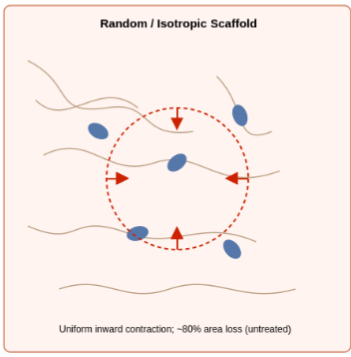
Pathological scarring and wound contraction remain significant medical challenges, often resulting in functional impairment, loss of mobility, and aesthetic distress(1,2). Adult wound healing usually ends with fibrotic scars and disorganized collagen. In contrast, fetal healing happens without scarring. Why? Because fetal skin has a low-tension environment and special fibroblast lineages(3,4). Central to this biophysical regulation is the YAP/TAZ signaling pathway, a mechanosensitive molecular rheostat that senses matrix stiffness and tension to drive the myofibroblast phenotype(5,6,7). This review examines recent advancements in the synergistic use of aligned scaffold architectures and dynamic mechanical stimulation to guide cellular recruitment and maturation(8,9,10). Furthermore, we explore therapeutic strategies to inhibit the YAP/TAZ pathway—ranging from pharmacological agents like Verteporfin to "smart" drug-delivery nanogels—to interrupt the fibrotic feedback loop and steer the healing process toward functional skin regeneration(11,12,13).
References
Sohutskay, D. O., Buganza Tepole, A., & Voytik-Harbin, S. L. (2021). Mechanobiological wound model for improved design and evaluation of collagen dermal replacement scaffolds. Acta Biomaterialia, 135, 368–382. https://doi.org/10.1016/j.actbio.2021.08.00
Weng, T., Zhang, L., Liu, Y., Zhao, X., & Yue, X. (2026). Advances in tissue engineering and biomaterials for minimizing wound scarring: Current status and future challenges. Journal of Functional Biomaterials, 17(1), 3. https://doi.org/10.3390/jfb17010003
See, G., Saker, H., Hammam, I. A., Mitchell, K., Ragland, C., & Hong, Z. (2026). Advancements in functional polymeric scaffolds for scar-free skin regeneration. Polymer Science & Technology. https://doi.org/10.1021/polymscitech.6c00019
Ahn, S., Ardoña, H. A. M., Campbell, P. H., Gonzalez, G. M., & Parker, K. K. (2019). Alfalfa nanofibers for dermal wound healing. ACS Applied Materials & Interfaces, 11(37), 33535–33547. https://doi.org/10.1021/acsami.9b07626
Fan, R., Zhang, C., Li, F., Li, B., McCarthy, A., Zhang, Y., Chen, S., & Zhang, L. (2024). Hierarchically assembled nanofiber scaffolds with dual growth factor gradients promote skin wound healing through rapid cell recruitment. Advanced Science, 11(14), 2309993. https://doi.org/10.1002/advs.202309993
Sharmin, T., Hossan, S., & Shirwaiker, R. A. (2026). Design and validation of a multi-modal bioreactor system: Assessing the effects of perfusion and cyclic tensile stimulation on mechanical and biological properties of 3D-printed missing-rib auxetic scaffolds. Bioengineering. https://doi.org/10.3390/bio13020003
Subramony, S. D., Dargis, B. R., Castillo, M., Azeloglu, E. U., Tracey, M. S., Su, A., & Lu, H. H. (2013). The guidance of stem cell differentiation by substrate alignment and mechanical stimulation. Biomaterials, 34, 1942–1953. https://doi.org/10.1016/j.biomaterials.2012.11.012
Jenkins, T. L. (2023). Optimizing engineered tendon development via structural and chemical signaling cues (Doctoral dissertation). Purdue University. https://doi.org/10.1002/jbm.a.37588
Piersma, B., Bank, R. A., & Boersema, M. (2015). Signaling in fibrosis: TGF-β, WNT, and YAP/TAZ converge. Frontiers in Medicine, 2, 59. https://doi.org/10.3389/fmed.2015.00059
Liu, F., Lagares, D., Choi, K. M., Stopfer, L., Marinkovic, A., Vrbanac, V., Probst, C. K., Hiemer, S. E., Sisson, T. H., Horowitz, J. C., Rosas, I. O., Fredenburgh, L. E., Feghali-Bostwick, C., Varelas, X., Tager, A. M., & Tschumperlin, D. J. (2015). Mechanosignaling through YAP and TAZ drives fibroblast activation and fibrosis. American Journal of Physiology-Lung Cellular and Molecular Physiology, 308(4), L344–L357. https://doi.org/10.1152/ajplung.00300.2014
Mascharak, S., desJardins-Park, H. E., Davitt, M. F., Griffin, M., Borrelli, M. R., Moore, A. L., Chen, K., Duoto, B., Chinta, M., Foster, D. S., Shen, A. H., Januszyk, M., Kwon, S. H., Wernig, G., Wan, D. C., Lorenz, H. P., Gurtner, G. C., & Longaker, M. T. (2025). Inhibiting mechanotransduction prevents scarring and yields regeneration in a large animal model. Science Translational Medicine, 17(786), eadt6387. https://doi.org/10.1126/scitranslmed.adt6387
Chen, K., Liu, Y., Liu, X., Guo, Y., Liu, J., Ding, J., Zhang, Z., Ni, X., & Chen, Y. (2023). Hyaluronic acid-modified and verteporfin-loaded polylactic acid nanogels promote scarless wound healing by accelerating wound re-epithelialization and controlling scar formation. Journal of Nanobiotechnology, 21(1), 241. https://doi.org/10.1186/s12951-023-02014-x
ClinicalTrials.gov. (2026). SCARFREE-001: Verteporfin for scar prevention (NCT07488988). https://clinicaltrials.gov/study/NCT07488988
Tang, Y., Ye, J., Xu, T., Sun, Y., Meng, W., Zhu, L., Jia, Z., Wu, Q., Chen, D., & Wu, F. (2025). CuATSM enhances wound repair without scarring via Hippo/YAP signalling pathway to reduce ferroptosis and macrophage polarisation. Journal of Cellular and Molecular Medicine, 29(12), e70590. https://doi.org/10.1111/jcmm.70590
Chu, C.-Q., & Quan, T. (2024). Fibroblast Yap/Taz signaling in extracellular matrix homeostasis and tissue fibrosis. Journal of Clinical Medicine, 13(12), 3358. https://doi.org/10.3390/jcm13123358
Patten, J., Albeltagy, N., Bonadio, J. D., Ortez, A., & Wang, K. (2025). EDA fibronectin microarchitecture and YAP translocation during wound closure. ACS Biomaterials Science & Engineering, 11(4), 2249–2262. https://doi.org/10.1021/acsbiomaterials.4c02019
Tiskratok, W., Chuinsiri, N., Limraksasin, P., Kyawsoewin, M., & Jitprasertwong, P. (2025). Extracellular matrix stiffness: Mechanotransduction and mechanobiological response-driven strategies for biomedical applications targeting fibroblast inflammation. Polymers, 17(6), 822. https://doi.org/10.3390/polym17060822
Niti, A., Kouzi-Koliakou, K., & Michopoulou, A. (2026). Fibroblast lineage switching as the developmental origin of scarring and target for regenerative healing. Biology, 15(5), 409. https://doi.org/10.3390/biology15050409
Yin, J., Zhang, S., Yang, C., Wang, Y., Shi, B., Zheng, Q., Zeng, N., & Huang, H. (2022). Mechanotransduction in skin wound healing and scar formation: Potential therapeutic targets for controlling hypertrophic scarring. Frontiers in Immunology, 13, 1028410. https://doi.org/10.3389/fimmu.2022.1028410
Downloads
Published
How to Cite
Issue
Section
License
Copyright (c) 2026 The Journal of Applied Tissue Engineering

This work is licensed under a Creative Commons Attribution-NonCommercial-NoDerivatives 4.0 International License.
